During a marathon, the best food is easy-to-digest carbohydrate taken in small, regular amounts: gels, sports drink, gummies or pretzels, with water and electrolytes alongside. Elite runner Jake Riley takes a Roctane gel roughly every 30 minutes and drinks only electrolytes from his bottles1. You do not need a plate of real food; you need quick sugar that your stomach already knows.
Key takeaways
- Gels, gummies, water, sports drinks and pretzels are the typical in-race foods listed by RaceTimes Magazine, chosen to restore hydration and balance electrolytes2.
- Elite marathoner Jake Riley takes a gel before every other aid station, about every 30 minutes, and keeps his bottles electrolyte-only1.
- Fat, fibre and spice are the most common causes of stomach trouble close to or during a run3.
- Nothing new on race day: test every gel, drink and supplement repeatedly in training first4.
- Carb loading comes before the start line, not during the race, so plan the two phases separately4.
What to eat during a marathon: the quick list
The most practical race foods are the ones that go down fast and sit lightly. RaceTimes Magazine lists gels, gummies, water, sports drinks and pretzels as typical in-run fuel, because you lose a lot of water and need to restore hydration and electrolyte balance as you go2. Salt tablets are another option it mentions for long distances2.
Here is how the main fuelling options compare in practice.
| Fuel | What it gives you | Practical note |
|---|---|---|
| Gels | Fast carbohydrate | Jake Riley takes Roctane gels before every other aid station, roughly every 30 minutes1 |
| Sports drink | Carbohydrate, fluid, electrolytes | Helps if your electrolytes feel unbalanced2 |
| Gummies | Solid, chewable sugar | Listed as typical in-run food2 |
| Pretzels | Carbohydrate plus salt | Listed as typical in-run food2 |
| Water | Fluid only | Pair with a carb source2 |
| Salt tablets | Sodium | Can help maintain hydration over long distances2 |
Elite athletes differ a lot. Sara Hall reports using a peach-flavoured ketone drink during the race, while Riley relies on gels and plain electrolytes1. Their own advice is that diets are personal and came out of trial and error, so no one's routine should be copied exactly1.
How the elites fuel and drink on the course
Elite marathoners keep the system simple: carbohydrate from gels, fluid and electrolytes from the bottles. Jake Riley, who finished 28th in the Tokyo Olympics marathon, drinks about 8-10 oz (roughly 240-300 ml) of an electrolyte drink per bottle, noting that splashing means you never get it all down1. Most major marathons provide drink stations every 5K, so he times gels around them1.
The pattern is worth borrowing:
- Separate your sources. Calories from gels, electrolytes and fluid from the bottle. This makes it easy to adjust one without changing the other1.
- Tie fuelling to landmarks. Taking a gel before alternate aid stations gives you a rhythm you do not have to think about at mile 201.
- Take one just before the start. Riley takes a gel on the start line, about five minutes out, and sips a UCAN drink during warm-up drills about half an hour before1.
How much carbohydrate and fluid do you need?
No single intake number fits every runner, so plan according to your personal sweat rate. A Hindustan Times marathon guide says fluid intake should be roughly 4-8 ounces (about 120-240 ml) every 20 minutes or so, and warns that losing even 2% of body weight through dehydration can hurt performance and recovery5.
On carbohydrate, the same guide puts full-marathon daily needs at 8-10 g per kilogram of body weight in the build-up, against 4-5 g/kg for an easy 30-45 minute day5. That is a training-day figure, not an in-race intake. For in-race hourly targets, work up gradually in long runs: RunDreamAchieve's training guide stresses building a simple carbs-per-hour plan and training your gut so race-day fuel feels normal6.
A workable approach:
- Decide on a gel or chew schedule tied to your pace (every 30-45 minutes is a common starting point; Riley's is about every 30 minutes1).
- Sip fluid at every aid station rather than gulping occasionally5.
- Add sodium if you are a heavy, salty sweater, but test it first4.
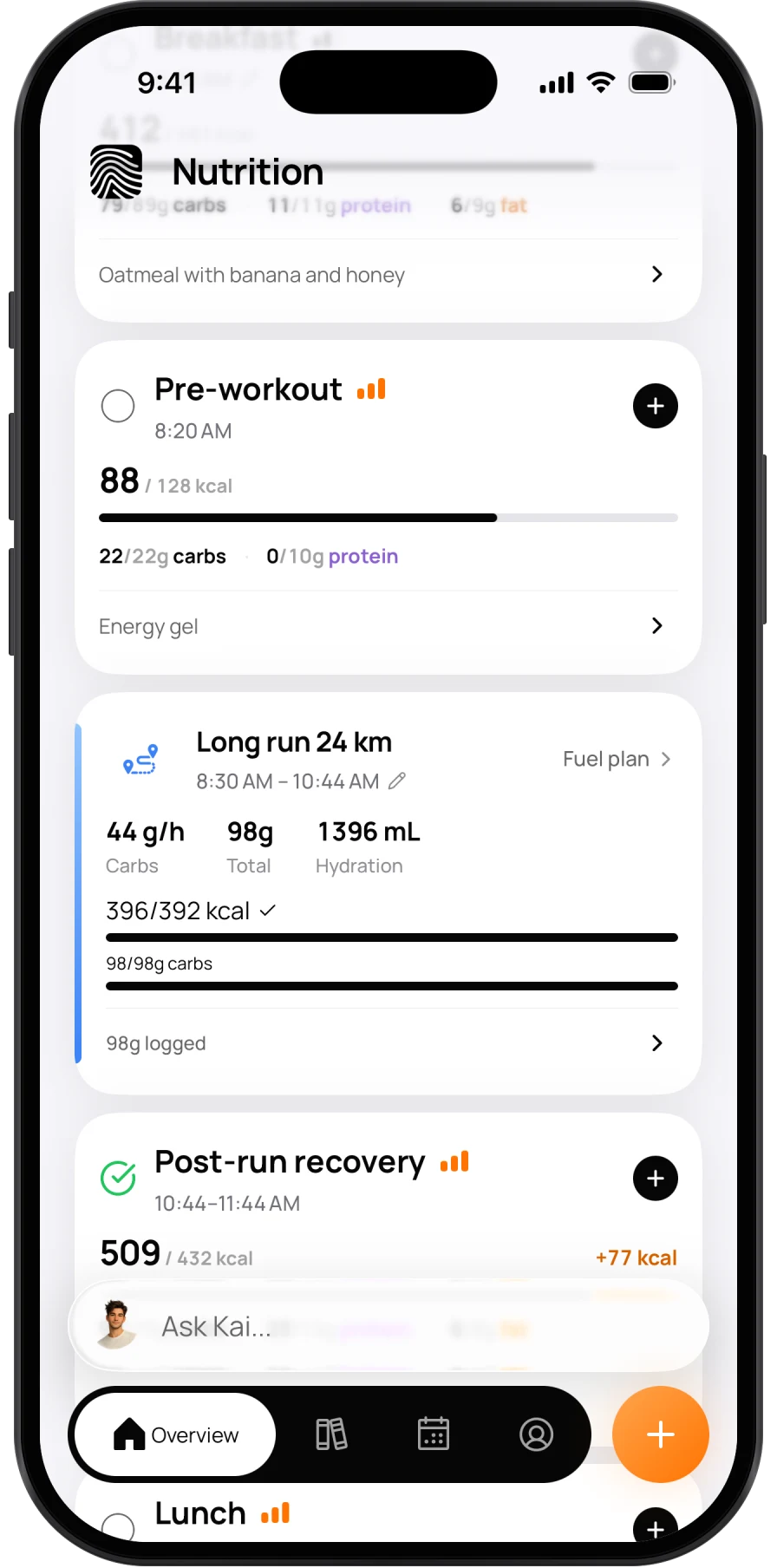
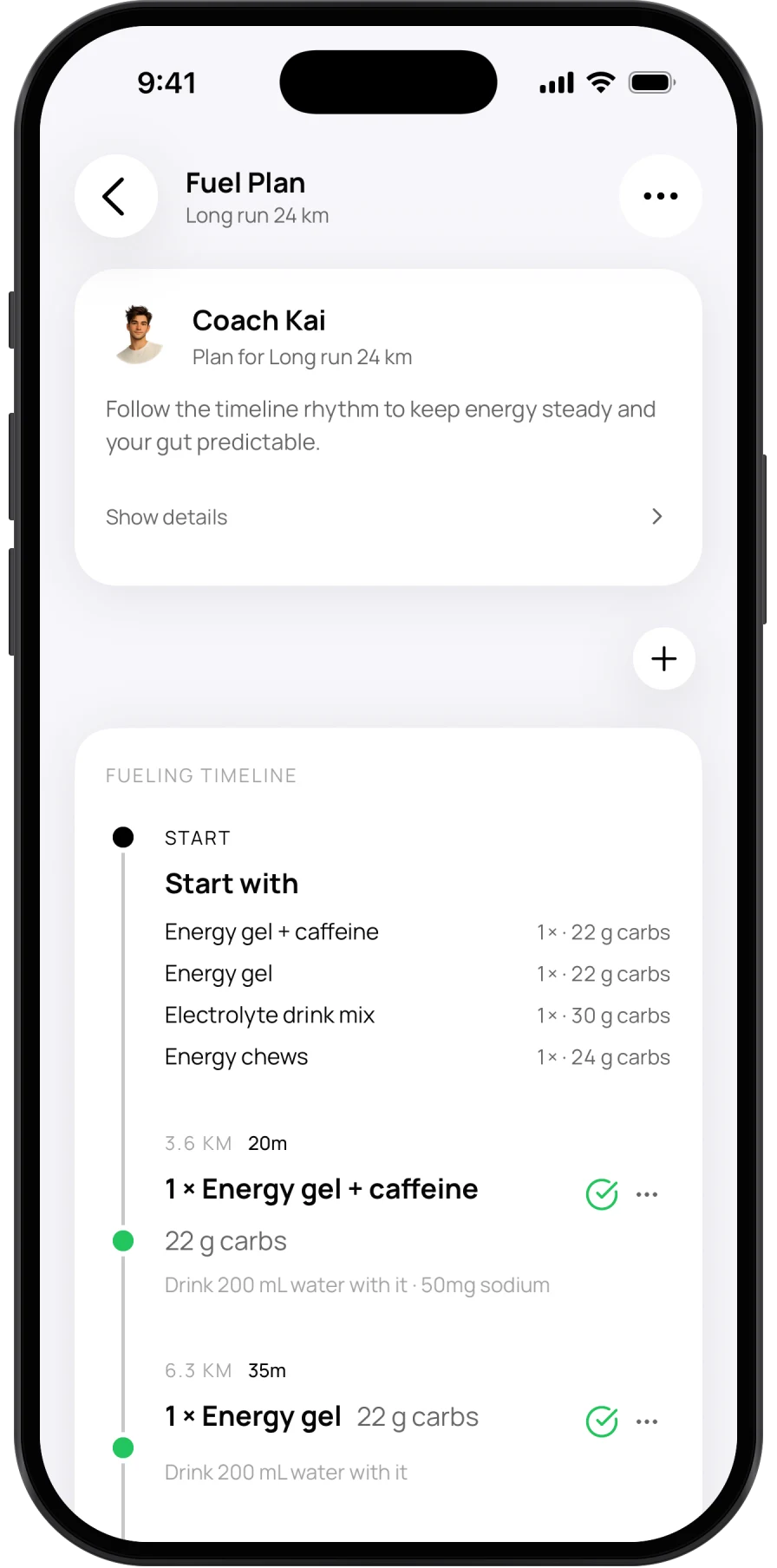
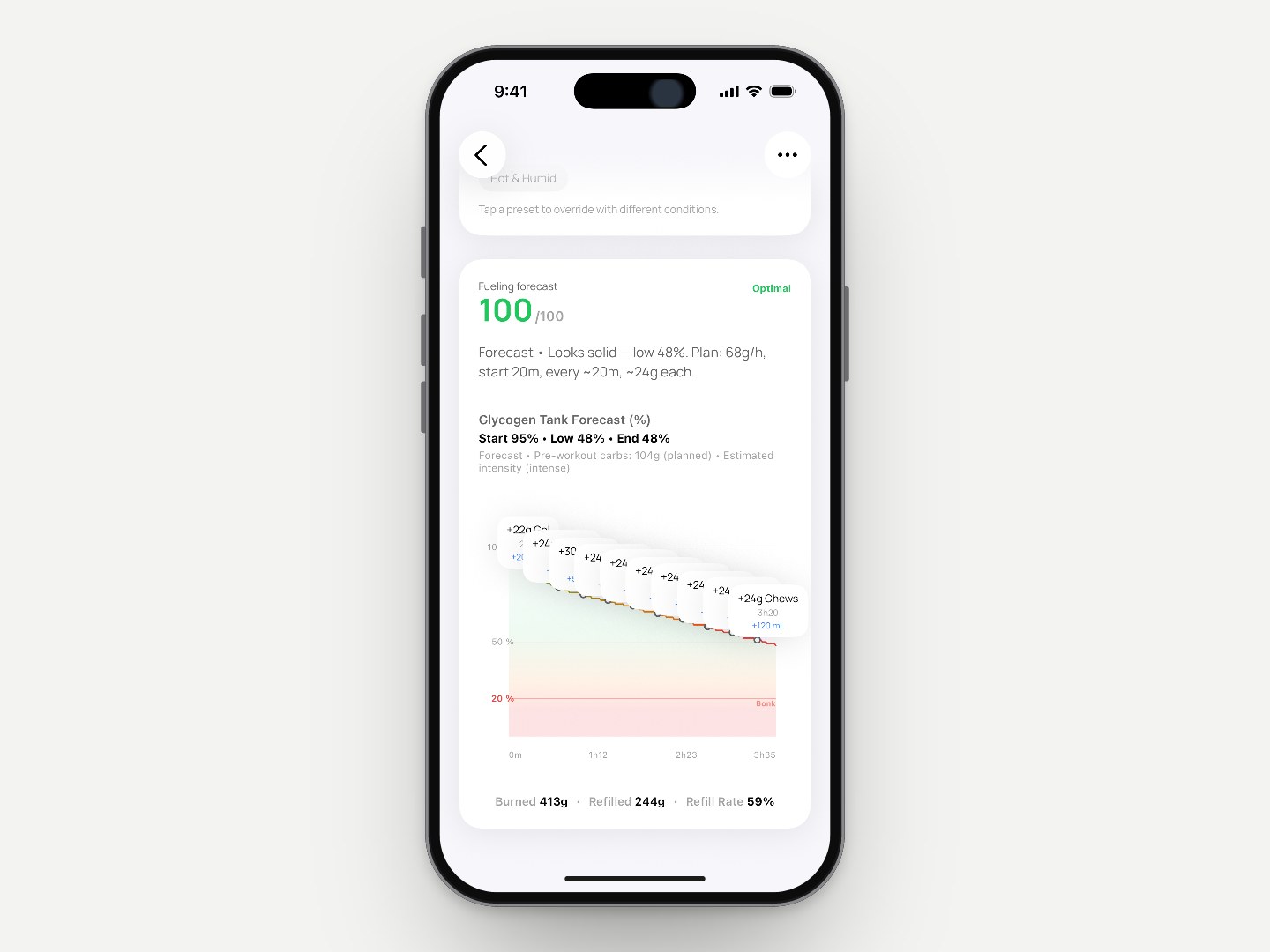
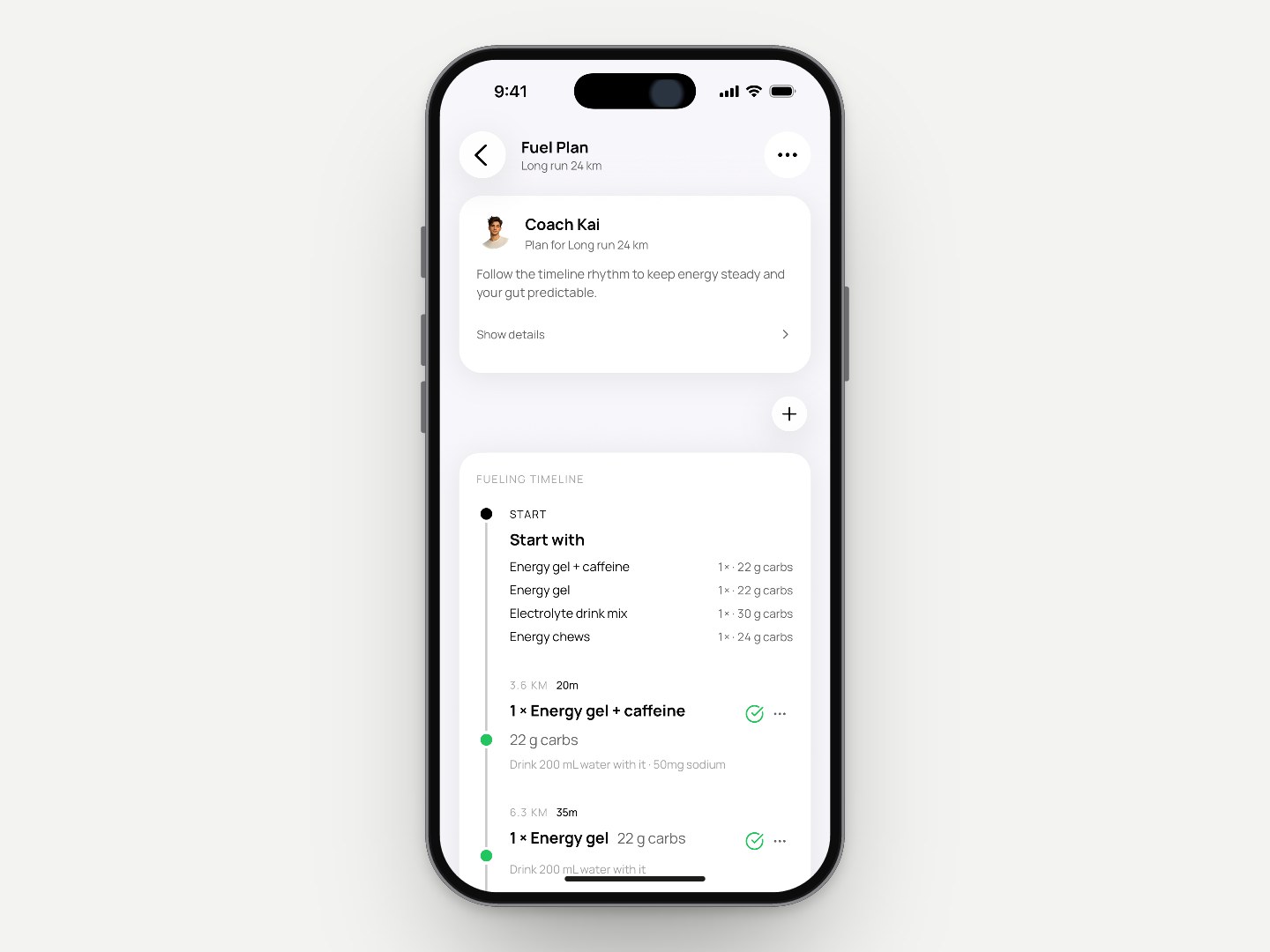
If you want to coordinate fuel and hydration stops against 26.2 miles, Mavr's race day nutrition planning lets you map your during-workout fueling across the course. You work out where your gels, drinks and electrolytes fall relative to the aid stations, then follow that plan on the day. Syncing it with the way you fuel in training keeps race day from being a first.
Foods and habits to avoid during the race
The foods most likely to ruin a race are high in fat, fibre or spice. Maximum Mileage Coaching warns that high-fat, spicy or high-fibre foods close to a run can cause digestive discomfort, and that caffeine should be tested in training before you use it on race day3. Hindustan Times similarly advises avoiding fried foods, rich sauces and high-fibre items around training sessions5.
Two more traps:
- Anything new. Race Smart repeats the golden rule, "nothing new on race day," and says every supplement and food choice should be test-driven repeatedly in training4.
- Too much coffee. Race Smart notes that overdoing coffee can cause dehydration by stimulating the kidneys to dump sodium4.
Jake Riley adds a practical point: low-protein, simple-carb breakfasts left him with an "empty" feeling in his warm-up, which mixed with adrenaline made him queasy1. If that happens to you, the fix is in the pre-race meal, not mid-race.
Fuelling before the start: what sets up your race
What you eat in the hours before the gun decides how much you need to take in during the race. Race Smart advises breakfast 2.5-3 hours before the start, mostly carbohydrate with a small amount of protein and very little fat, with 12-20 oz of fluid4. Its targets are 2-3 g of carbohydrate per kilogram of body weight, and its examples run to 150-159 g of carbohydrate, such as a bagel with jam and peanut butter plus a banana, or a cup of cooked oatmeal with fruit and honey4.
For the two days before, Race Smart suggests 8-10 g/kg of low-fibre carbohydrate, finishing the last big meal by 5-6 pm and keeping it bland and low in fat4. Its dinner examples include white rice with grilled chicken, or pasta with a mild red sauce, not creamy sauces4. Elite runners agree: Nell Rojas eats white rice and chicken breast the night before1.
Practise your race fuelling in training
Practising is what turns a plan into something your stomach tolerates. RunDreamAchieve's guide says to train your gut now so race-day fuel feels normal, and to build a simple carbs-per-hour plan you can actually follow6. Do this on your long runs, using the same brands, flavours and timing you intend to use on race day46.
A practical routine:
- On long runs, rehearse the exact gel or chew schedule and the aid-station drinking pattern.
- Note any stomach problems and change one variable at a time.
- Test caffeine and sodium separately34.
Frequently asked questions
What food should I consume while running a marathon?
Stick to fast carbohydrate such as gels, gummies, sports drink and pretzels, with water and electrolytes. RaceTimes Magazine lists these as typical in-run options2. Elite runner Jake Riley takes a gel roughly every 30 minutes and keeps his bottles electrolyte-only1.
What are the best foods to eat before running a marathon?
Eat a carbohydrate-heavy, low-fat, low-fibre breakfast 2.5-3 hours before the start, such as a bagel with jam and banana or oatmeal with fruit and honey4. Maximum Mileage Coaching advises avoiding high-fat, spicy or high-fibre foods close to a run3.
What is the 10-10-10 rule for marathons?
It is a pacing rule, not a fuelling one: run the first 10 miles a little slower than goal pace, the next 10 miles at goal pace, and the last 10 kilometres as strongly as you can hold. For fuelling, rely on tested routines like the fluid and gel timings above.
Why do ultra runners eat watermelon?
Watermelon is a water-rich, easily digested fruit, which makes it a popular aid-station food on long ultra courses. It gives fluid and simple sugar without the heaviness of solid food. Whether it suits you is something to check in training.
How many gels for a 3 hour marathon?
There is no fixed number. As a reference point, Jake Riley takes a Roctane gel about every 30 minutes1, which over three hours would be roughly five or six gels plus one at the start. Work out your own intake in long runs and adjust for tolerance6.
Sources
- 1What the elites eat: Marathon Editionmybestruns.com
- 2RaceTimes Magazineracetimesmagazine.com
- 3What Should Marathon Runners Eat and Avoid?maximummileagecoaching.com
- 4Race Week Nutrition Guide for Endurance Athletesracesmart.com
- 5Marathon training: The what, when and how much you must eat to prepare for a racehindustantimes.com
- 6What To Eat When Marathon Trainingrundreamachieve.com