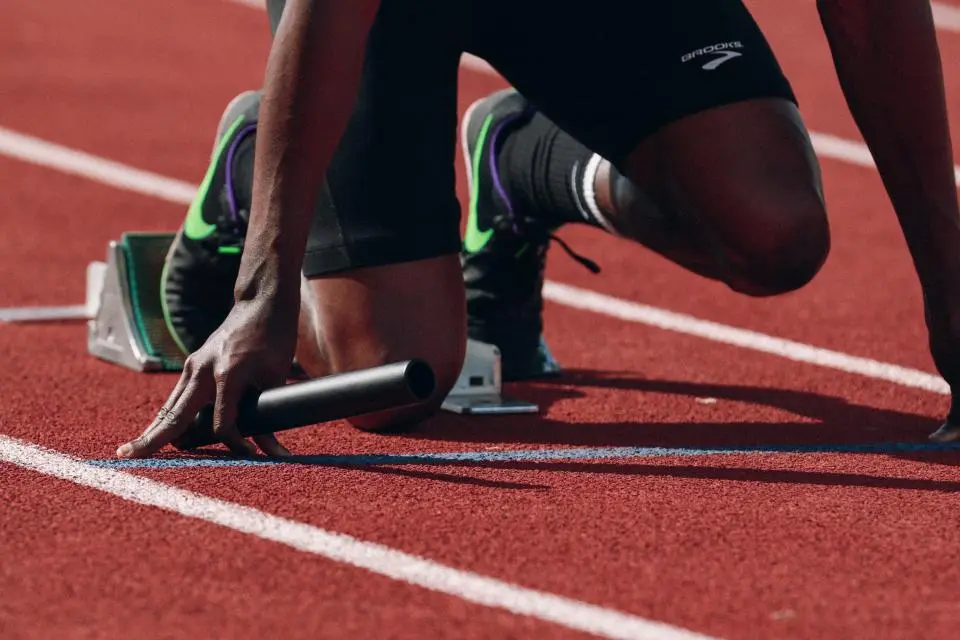
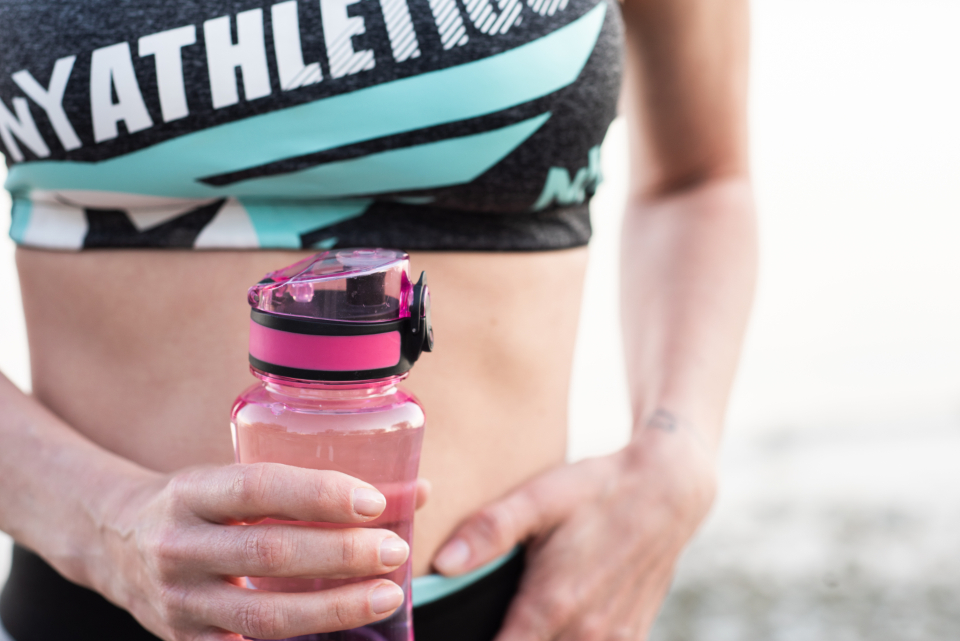
The best energy gel for Hyrox is a mid-carbohydrate gel you have already tested in training, in the 22-30 g range with some sodium, and with caffeine only if your stomach handles it. A Hyrox race is roughly an hour of running broken up by eight stations, so the practical plan is one gel before you start and then one every 30-45 minutes, each washed down with water. Use the tables below to compare carbohydrate, caffeine, and sodium levels across different gels so you can choose the right option for your race.
Key takeaways
- Gels vary a lot in carbohydrate: High5 has 23 g per gel, GU has 22 g, Torq has 30 g and OTE Super Gel has 40 g, double a typical gel, according to The Recommended1.
- GU's own guidance, relayed by Gear Hungry, is one packet 5 minutes before activity and one every 45 minutes during exercise2.
- Caffeine ranges from 0 to 100 mg per gel, so check the label before you pick one for race day2.
- Trial and error in training matters more than the brand: The Recommended warns that an untested gel on race day can upset your stomach1.
- You cannot grab a gel mid-station and expect an easy time, so decide in advance where on the course you will take each one.
Which gels suit a Hyrox race best?
The gels that suit Hyrox best are moderate-carbohydrate, easy-to-swallow gels with some electrolytes, because you will be taking them while breathing hard between runs and stations. A Hyrox race, as covered in our Hyrox workout guide, alternates 1 km runs with eight work stations, so you rarely get a calm moment to eat. That favours a thin gel you can swallow in a few seconds over a dense one that needs a lot of water.
The Recommended's roundup of user-reviewed gels (published September 2022) gives the clearest numbers to compare1. It describes energy gels as supplying "quick-releasing carbohydrates that top up the glycogen stores that your body uses as fuel"1. Here is how its picks line up:
| Gel | Carbohydrate | Caffeine | Pack size | Notable feature |
|---|---|---|---|---|
| HIGH5 Energy Gel | 23 g | 30 mg (optional version) | 40 g | Lump-free consistency1 |
| OTE Super Gel | 40 g | none listed | 66 g | Electrolytes included1 |
| Dextro Energy Gel | 28 g | none listed | 60 g | Resealable screw-top1 |
| Powerbar PowerGel Hydro | 25 g | 51 mg | 67 g | 200 mg sodium per pouch1 |
| Torq Energy Gel | 30 g | none listed | 45 g | Five electrolytes, 2:1 maltodextrin to fructose1 |
| GU Energy Gel | 22 g | varies by flavour | 32 g | 100 calories per sachet1 |
Two patterns matter for Hyrox. First, a gel with a mix of maltodextrin and fructose is said to help the body absorb carbohydrate faster, which is the logic behind Torq's 2:1 ratio and OTE's blend1. Second, a resealable pack such as Dextro's lets you take half a gel, which is useful when you only want a small top-up between stations1.
A note on the "rapid stomach emptying" idea: a thinner, lower-viscosity gel tends to leave the stomach more easily. Gearweare says Science in Sport's Go Isotonic Gel has a lower viscosity and is the only gel on its list that "doesn't require that you drink water"3. That is useful in a race where you may not want to stop at a bottle. Gearweare's guide was last updated in February 2022, so check current formulas before buying3.
Can you bring gels to Hyrox?
Yes, you can carry your own gels in a race, but how you carry them matters more than whether you may. Confirm the current rules with your event's athlete guide before race day, because organisers set what you may carry and where you may leave supplies.
What you can control is the format. A gel that fits in a pocket of your race kit and opens with one hand is easier than a bulky pouch. Gearhungry notes that CLIF Shot's packaging has a "litter leash" top that stays attached to the pack, which is handy when you are tearing open a gel on the move and do not want to drop a piece of wrapper2. Dextro's resealable cap is the other end of the same idea: nothing to tear, and nothing to leak into your pocket1.
Practical steps for carrying gels in a Hyrox race:
- Decide how many you need before the race (see the timing section below) and pack only that number plus one spare.
- Put the first gel where you can reach it without stopping, such as a front pocket on your shorts or vest.
- Open the first gel in training with the same hand and the same kit you will wear on race day, so you know it works while you are out of breath.
- Plan to eat during a run segment, not mid-station, so your hands are free and you are not holding up a sled push or a row.
If you are choosing a race, our guide on finding a Hyrox competition near you covers what to check about each event before you sign up.
When should you take energy gels when running?
Take your first gel about 5-15 minutes before you start and then one every 30-45 minutes, according to the manufacturer guidance quoted in the Gear Hungry guide2. That guide quotes GU's advice as one packet 5 minutes before activity and one every 45 minutes during exercise2. It quotes Huma's as one packet 15 minutes before and one every 30-45 minutes, and it says Huma must be consumed with water2. CLIF Shot's advice there is one packet 15 minutes before activity, one to two packets per hour during it, and one straight after to aid recovery2.
Those figures give you a workable window. The table below sets out the guidance side by side:
| Brand | Before the start | During | After |
|---|---|---|---|
| GU Energy | 1 packet, 5 min before | 1 packet every 45 min | not stated2 |
| CLIF Shot | 1 packet, 15 min before | 1-2 packets per hour | 1 packet straight after2 |
| Huma Chia | 1 packet, 15 min before | 1 packet every 30-45 min, with water | not stated2 |
Gel texture is the other thing that changes how you take it. Women's Health's fitness director, writing in July 2017, says the key with gels is to "sip" them: "Take a small taste and pair it with a big gulp of water, which thins the gel out"4. That article is more than two years old, so treat it as a technique tip rather than current product advice4.
The Recommended also makes a point that applies directly to Hyrox: "Leave it to race day, and you could risk undoing months of hard work by taking a gel that upsets your stomach or doesn't provide your body with the right fuel"1. Practise your timing in your long training sessions and in at least one full Hyrox-style simulation. The Hyrox workout guide lays out the sessions where this rehearsal fits.
A simple Hyrox gel schedule
Hyrox finish times vary widely by athlete, so tie the schedule to the clock rather than to a particular station. Assuming a race of about 60-90 minutes:
- Before the start: one gel 5-15 minutes ahead, following the brand guidance above2.
- Around 30-40 minutes in: one gel during a run segment, with water.
- Around 60-75 minutes in (if you are still racing): a second gel, again during a run.
A shorter, faster race may need only the pre-race gel and one during. A slower one may need a third. Adjust to your pace and test it first.
How many gels do you need for a long run or a Hyrox race?
For a run of about 10 miles (16 km) lasting around 90 minutes, most guidance points to one gel before and one to three during, depending on pace and the carbohydrate in each gel. The brand guidance in Gear Hungry's guide is the best anchor: one every 45 minutes for GU, and one to two per hour for CLIF Shot2. At 90 minutes, that is two gels during the run for GU or up to three for CLIF Shot, plus the pre-run one.
Carbohydrate content changes the count. A 40 g gel such as OTE's delivers about the same carbohydrate as nearly two 22 g gels1. If you switch from GU's 22 g sachet to a 40 g pouch, you should not simply keep the same number of packs, or you will take in far more than you planned1. Look at the grams, not the pack count.
A quick way to work it out:
- Decide how many grams of carbohydrate per hour you want to aim for in training.
- Divide by the grams in your chosen gel.
- Round to a whole number and space them evenly.
For example, with a 23 g gel such as High5's, taking two per hour is about 46 g per hour1. With a 40 g OTE pouch, one per hour already gets you close1.
One more factor is calories. GU says each 32 g sachet carries 100 calories, and Gear Hungry notes Honey Stinger's gels are 100 calories per packet too12. The Recommended relays GU's view that more calories could divert blood away from the muscles for athletes with a slow metabolism, while those with a high metabolism may want a gel more often1. Treat that as a reason to test, not a rule.
If you want the numbers worked out for your own body weight and race, Mavr's During-Workout Fueling calculates your carb and electrolyte intake from your workout duration and intensity. You enter the session and get back a plan for how much to take and when, which you can then rehearse in training. Mavr also turns your training plan into daily fueling, so the gel plan sits alongside your meals rather than apart from them.
What are the most effective energy gels, and what should you look for?
The most effective gel is the one that delivers enough carbohydrate for your effort, sits well in your stomach and matches how you will carry and take it, rather than any single brand. The lists you will find online agree on a few features, and the roundups disagree on a winner, which tells you the choice comes down to fit.
Here are the features that the guides keep returning to:
Carbohydrate type and amount
Gels built on maltodextrin plus fructose are said to speed absorption. Torq uses a 2:1 maltodextrin to fructose ratio for its 30 g of carbohydrate1. Powerbar's guide listing, as relayed by Gearweare, describes a "C2MAX blend" using both glucose and fructose3. A single-sugar gel such as Dextro's, which has 28 g of dextrose, is described as providing an "immediate boost"1.
Electrolytes and sodium
Powerbar PowerGel Hydro has 200 mg of sodium per pouch, which The Recommended says helps replace salts lost during exercise1. OTE and Torq both include electrolytes1. Hyrox is a sweaty, indoor event for many athletes, so this matters. Honey Stinger's classic gel lists added electrolytes and B vitamins, and Gear Hungry describes it as 95% honey2.
Caffeine
Caffeine ranges widely. High5 has an optional 30 mg version, Powerbar has 51 mg, and CLIF Shot comes in four levels from 0 to 100 mg12. Gearweare says Pacific Health's gel carries 100 mg of caffeine3. The Recommended notes caffeine is a popular addition for focus, "but one which isn't always suitable for every athlete"1. If you have never trained with caffeine in a gel, start with the zero or low version.
Texture and format
Gu is described as denser than most gels and requiring water1. Science in Sport Go Isotonic is thinner3. Chews and blocks are an alternative: Women's Health's fitness director describes chews as smaller and chewier than blocks, and recommends Clif Bloks, Honey Stinger chews and GU gels in her roundup4. On a Hyrox course, anything you have to chew costs you breathing time, so a gel is usually easier.
Ingredients and dietary needs
High5 contains no artificial sweeteners or colourings1. Torq is gluten-free and suitable for vegans1. Honey Stinger is soy-free, nut-free and dairy-free2. Check the label against your own needs.
A branded Hyrox option
One retail listing at GoSupps.com sells a MyProtein HYROX Energy Gel 20-pack, described as an intra-workout gel with vitamin B, electrolytes and 30 g of carbohydrate per gel in raspberry lemonade flavour5. That is a single retailer's product listing, so treat the claims as the seller's and check the label and the price where you buy5. The listing was read in November 2026.
How do you build your own gel plan?
Build your plan in training by working out your target carbohydrate per hour, choosing one or two gels that fit, and rehearsing the exact timing until nothing about race day is new. The guides all say the same thing in different words: test before you race1.
A process that works:
- Pick two or three candidate gels from the table above. Choose one low-caffeine and one higher-caffeine option if you want to compare.
- Run a long session of 75-90 minutes at race effort and take a gel at the times in the schedule. Note how your stomach feels.
- Repeat with a second gel a week later. Change one thing at a time.
- Rehearse the carry. Wear the kit you will race in, with the gel in the pocket you will use.
- Do a full simulation that includes stations, because stomach comfort changes when you move from steady running to sled pushes and wall balls.
- Write the final plan down and keep it on your phone or in your bag.
Mavr's During-Workout Fueling does the arithmetic in step two for you. You give it the duration and intensity of your session and it returns your carb and electrolyte intake, so you can set the number of gels and any added sodium before you head out. Because meal timing in Mavr is synced to your training, you can also see what to eat in the hours before the session and after it.
If your stomach struggles with gels at hard effort, the alternatives in the roundups are chews and blocks, which Women's Health describes as having a texture you can "really savor"4. Another option is a low-viscosity isotonic gel that does not need water, as Gearweare describes for Science in Sport Go3.
Frequently asked questions
Which energy gels are best for maintaining power during a Hyrox race?
Choose a gel with 22-30 g of carbohydrate, some sodium or electrolytes, and caffeine only if you have tested it. The Recommended lists High5 (23 g), Torq (30 g with a 2:1 maltodextrin to fructose ratio) and Powerbar PowerGel Hydro (25 g with 200 mg sodium) among its picks1. The one you have trained with is the best choice, because an untested gel can upset your stomach on race day1.
Can I bring gels to HYROX?
You can carry your own gels in most races, but check your event's athlete guide for the current rules before race day. Pick a pack that opens with one hand and fits a pocket, such as CLIF Shot's attached "litter leash" top or Dextro's resealable cap21. Practise opening it while out of breath.
When should I take energy gels when running?
Take the first one 5-15 minutes before you start and then one every 30-45 minutes. Gear Hungry quotes GU as one packet 5 minutes before and one every 45 minutes, and CLIF Shot as one packet 15 minutes before and one to two per hour2. Take each with water, since Women's Health advises pairing a small taste with "a big gulp of water"4.
How many gels for a 10 mile run?
For a run of about 90 minutes, plan one gel before and two during if you follow GU's one-every-45-minutes guidance2. CLIF Shot's guidance of one to two per hour could mean up to three2. Count grams of carbohydrate rather than packs, because a 40 g OTE gel holds nearly twice the carbohydrate of a 22 g GU sachet1.
What are the most effective energy gels?
The most effective gel is the one that supplies enough carbohydrate, sits well in your stomach and is easy to take at effort. Roundups name different winners: Gear Hungry picks GU Energy Original, Gearweare picks CLIF Shot and The Recommended picks High5231. Use their carbohydrate, sodium and caffeine numbers to shortlist, then test in training.